


Built from zero
Starting Point
VERGARD began as VoiceGuard — a speculative product designed to detect deepfakes and protect digital identity. The technology itself was not unique. The real challenge was to create a reason for this product to exist, differentiate it from established competitors and make an invisible security service understandable and desirable.

The first idea described a function, not a reason to buy.
0
0
Crowded category
Deepfake detection was already an established market.
0
0
Invisible product
The value is an incident that never happens.
0
0
Low urgency
The buyer does not yet feel personally exposed.


No Route
There was no defined buyer, offer or path from awareness to sale.

There was no defined buyer, offer or path from awareness to sale.
01
Brand Identity
Elevating brand presence through cohesive visual systems and creative storytelling across global markets.





Go-to-Market
Building demand for a security category customers did not yet know they needed.


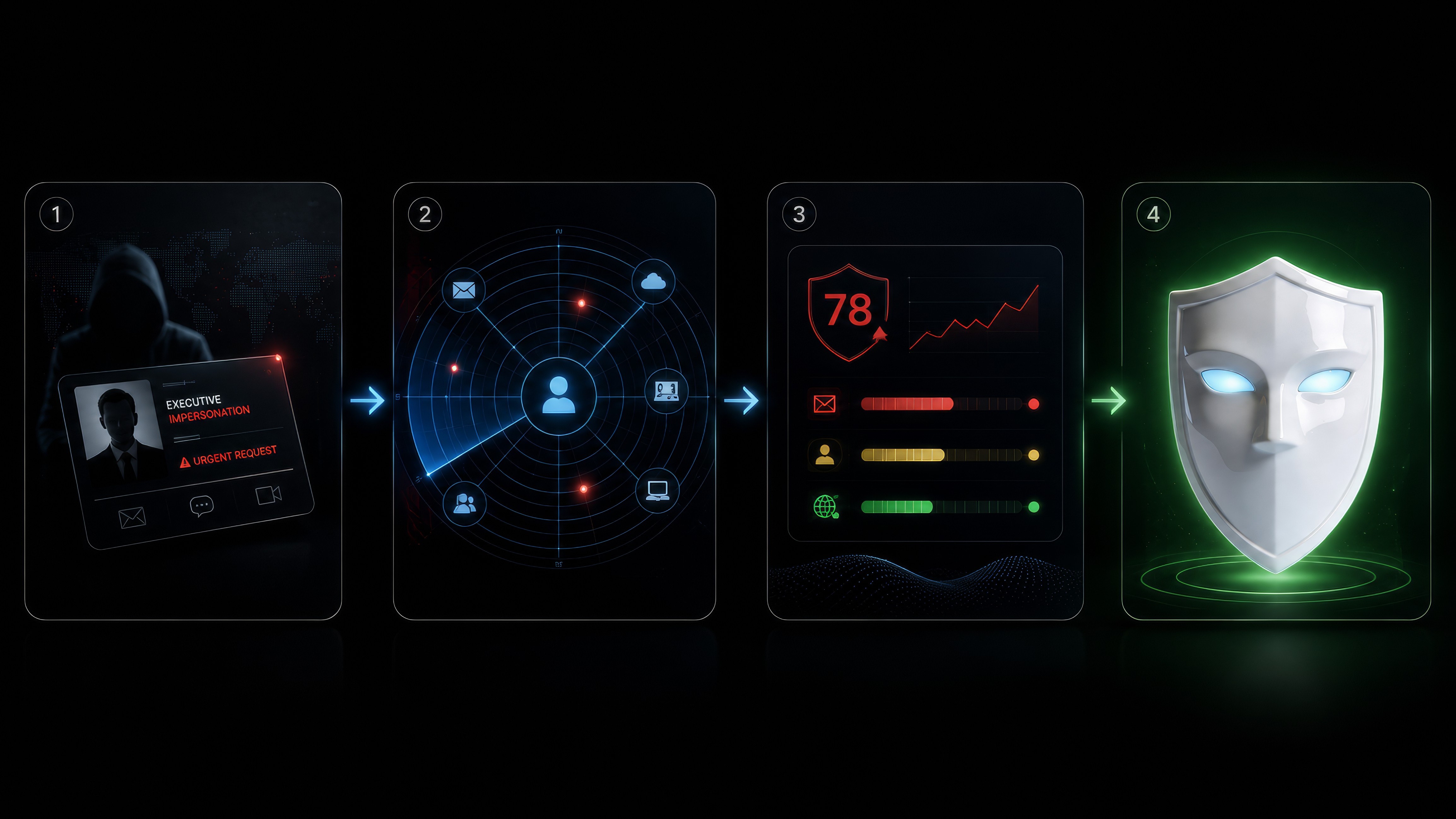
Capability Stack
Where the armor becomes behavior




Process
Approach
A business-first approach that turns complex ideas into clear, desirable products.
01 — Frame the Business Risk
Deepfake fraud isn't a data breach — it's an authority breach. When a CEO's voice can be cloned, every wire transfer and board directive becomes an attack surface. I framed the risk in the buyer's language: trust and reputation, not packets and protocols. That single reframe drove every decision after it. tion could turn a trusted voice or face into financial, operational, and reputational damage.
15% complete
DISCOVERY
02 — Map the Decision Chain
Who actually gets fooled? Not the CEO — the people around them. The assistant who books the transfer, the CFO on a late-night "emergency" call. I mapped the chain of people who act on a familiar voice, and aimed the product story at protecting the chain, not just the person at the top.
30% complete
AUDIENCE
03 — Study the Category
Cybersecurity's visual language is its weakness: hackers in hoodies, neon grids, fear without a face. It makes threats feel abstract — and abstract threats don't get budgets. My conclusion was a list of what NOT to do. The category's clichés became my negative brief.
45% complete
RESEARCH
04 — Define the Positioning
"In the past, power needed armor. In the AI age, authority needs identity protection." Not written — arrived at: symptom (familiar voices fool companies) → reframe (it's a trust failure, not a tech failure) → metaphor (armor, updated). Historical, human, physical — everything the category isn't.
60% complete
POSITIONING
05 — Build the Brand System
Every choice had a rejected alternative. A mask shaped like a shield — not a lock, because locks say "access" and this is about identity. Status colors borrowed from security dashboards on purpose — familiarity builds trust faster than novelty. Two visual worlds, deliberately split: light for the product, noir for the threat. A shield cut into the "V" of the wordmark — so even plain text carries the idea.
85% complete
SYSTEM
06 — Design the Go-to-Market
The threat is invisible, so the GTM makes it visceral: a noir graphic-novel series of real-pattern fraud stories ("The Meeting", "The Minister's Voice", "The Familiar Voice") built for the website, social, and printed exhibition takeaways. Fear does the acquisition; the calm white product does the conversion.
100% complete
GTM
Crafted sales system
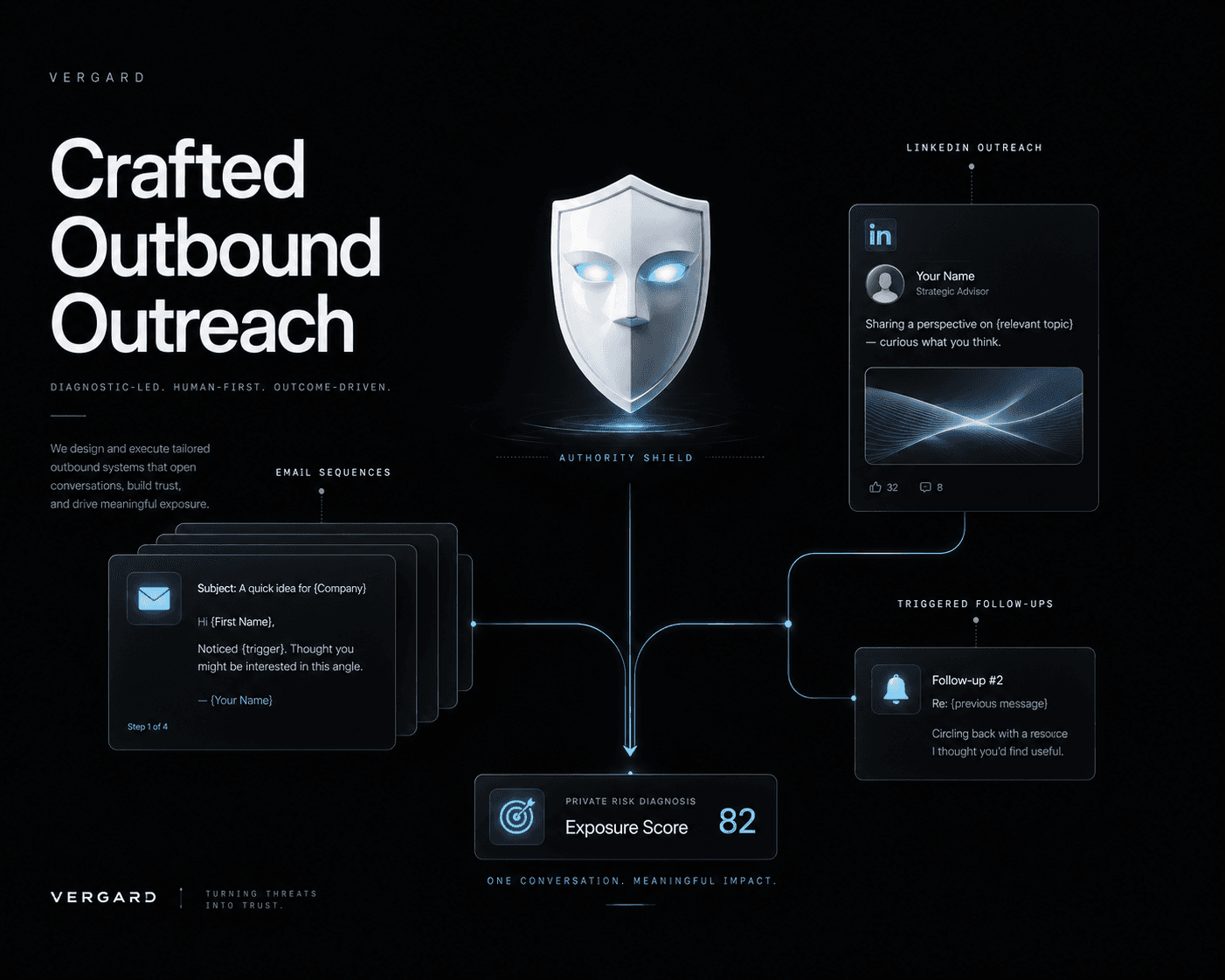


Sales Funnel
Triggered follow-up
Once the prospect engages, the conversation becomes personal.


The funnel does not manufacture fear. It converts uncertainty into a decision.
See
A visual metaphor creates initial recognition.
01
Relate
The prospect recognises a familiar scenario.
02
Diagnose
The Exposure Score evaluates the process.
03
Understand
The result names the priority gap.
04
Discuss
Follow-up is based on actual answers.
05
Act
Diagnosis becomes a verification protocol.
06
Software in use
Tools stack
Gemini

Market research, competitor analysis and the original case concept.
Claude

Long-form thinking, case architecture and narrative refinement.
ChatGPT

Positioning, messaging, creative concepts and rapid iteration.
Higgsfield

Camera language, cinematic shot concepts and motion direction.
Kling

Image animation, motion tests and cinematic brand sequences.
Figma

Case layouts, visual systems and final presentation design.
Framer

Responsive website assembly, interactions and publishing.